
Abuse & Harassment
What is Abuse & Harassment?
It is the IIHF’s strong belief that everyone engaged in and around ice hockey has the right to participate in a respectful environment free of abuse and harassment in order to strengthen and promote the game of ice hockey around the world.The IIHF defines Abuse & Harassment as follows:
Bullying – (including cyber-bullying if conducted online or electronically) means unwanted, repeated and/or intentional, aggressive behavior, usually among peers, which can involve a real or perceived power imbalance. Bullying can include actions such as making threats, spreading rumors or falsehoods, attacking someone physically or verbally and deliberately excluding someone.
Hazing – means an organized, usually group or team-based, degrading or hazardous initiation of new team members by veteran team members.
Neglect – means the failure of any person with a direct or indirect duty of care towards the player, which is causing harm, allowing harm to be caused, or creating an imminent danger of harm.
Emotional abuse – means any unwelcome act including confinement, isolation, verbal assault, humiliation, intimidation, infantilization, grooming or any other treatment which may diminish the sense of identity, dignity, and self-worth.
Physical abuse – means any deliberate and unwelcome act – such as for example punching, beating, boundary transgression, kicking, biting and burning – that causes or threatens to cause physical trauma or injury.
Racism and discrimination – means any action or attitude, that subordinates or prejudices an individual or group based on race, skin colour, age, gender and gender identity, language, disability, ethnic, national or social origin, religion, philosophical or political opinion, marital status or sexual orientation, physical attributes, mental or physical disability, athletic abilities or other status.
Sexual misconduct – means any conduct of a sexual nature, whether non-contact, contact or penetrative, where consent is coerced/manipulated or is not or cannot be given. It includes sexual harassment, meaning any unwanted and unwelcome conduct of a sexual nature, whether verbal, non-verbal or physical.
Other harms or risk of harm - means engaging, or attempting or threating to engage, in conduct that directly or indirectly harms the physical and/or mental welfare and/or safety of one or more Covered Party, and/or posing a risk of harm to the physical and/or mental welfare and/or safety of one or more Covered Party.
Mandatory online course for coaches
IIHF introduces mandatory online course for coaches ahead of every IIHF Championship.In a significant step towards ensuring the safety and well-being of all participants, the IIHF is launching a new mandatory online course on abuse and harassment for all coaches participating in IIHF World Championships across all divisions, effective from the 2024/2025 season onwards.
The course is designed as an online self-learning module and is accessible HERE.
Fundamental principles
1. Zero toleranceThe IIHF is committed to safeguarding all people engaged in ice hockey and takes a zero tolerance approach to any form of racism, discrimination, bullying, harassment and abuse.
2. Paramountcy
The needs and welfare of victims and other vulnerable groups are paramount, and the IIHF pursues an approach favorable to the welfare of victims, children and other vulnerable groups in all its dealings.
3. Collective responsibility
It is the responsibility of everyone involved in the game of ice hockey to recognize and respond to signs of harassment and abuse.
4. Confidentiality
All Abuse & Harassment cases will always be dealt with strict confidence.
Relevant Rules
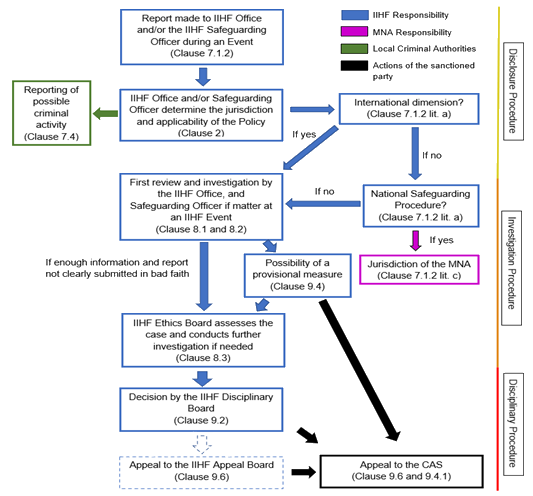
The IIHF Abuse & Harassment Regulations can be found here.Reporting
All concerns regarding Abuse & Harassment can at all times be reported to the IIHF on the reporting page.Investigations and Sanctions
Currently suspended
None