
The winner of the 2026 Johan Bollue Award, Latvian coach Aleksandrs Cicurskis, is one of those coaches who can get their players to do almost anything.
For him. For each other.
He’s a hockey coach, but for many, he’s been their life coach. Known to be tough but fair, Cicurskis has dedicated his life to coaching kids in Latvia — regardless of whether they’ll make it to the national team or the NHL.
And many of them have.
In the 2026 IIHF World Championship, a former Cicurskis protégé, Rudolfs Balcers, captained the Latvian team and broke the nation’s record for most goals in a single tournament, with seven. Other notable players to come out of the Cicurskis school include former NHLer Sandis Ozonlish and Aleksandrs Belavskis, another former Team Latvia captain, who was on the first team that Cicurskis ever coached in the early 1970s.
At that time, he was still an active player, but the junior team at his club needed a new coach because the old one had a drinking problem. The club’s management told Cicurskis that he was now the coach.
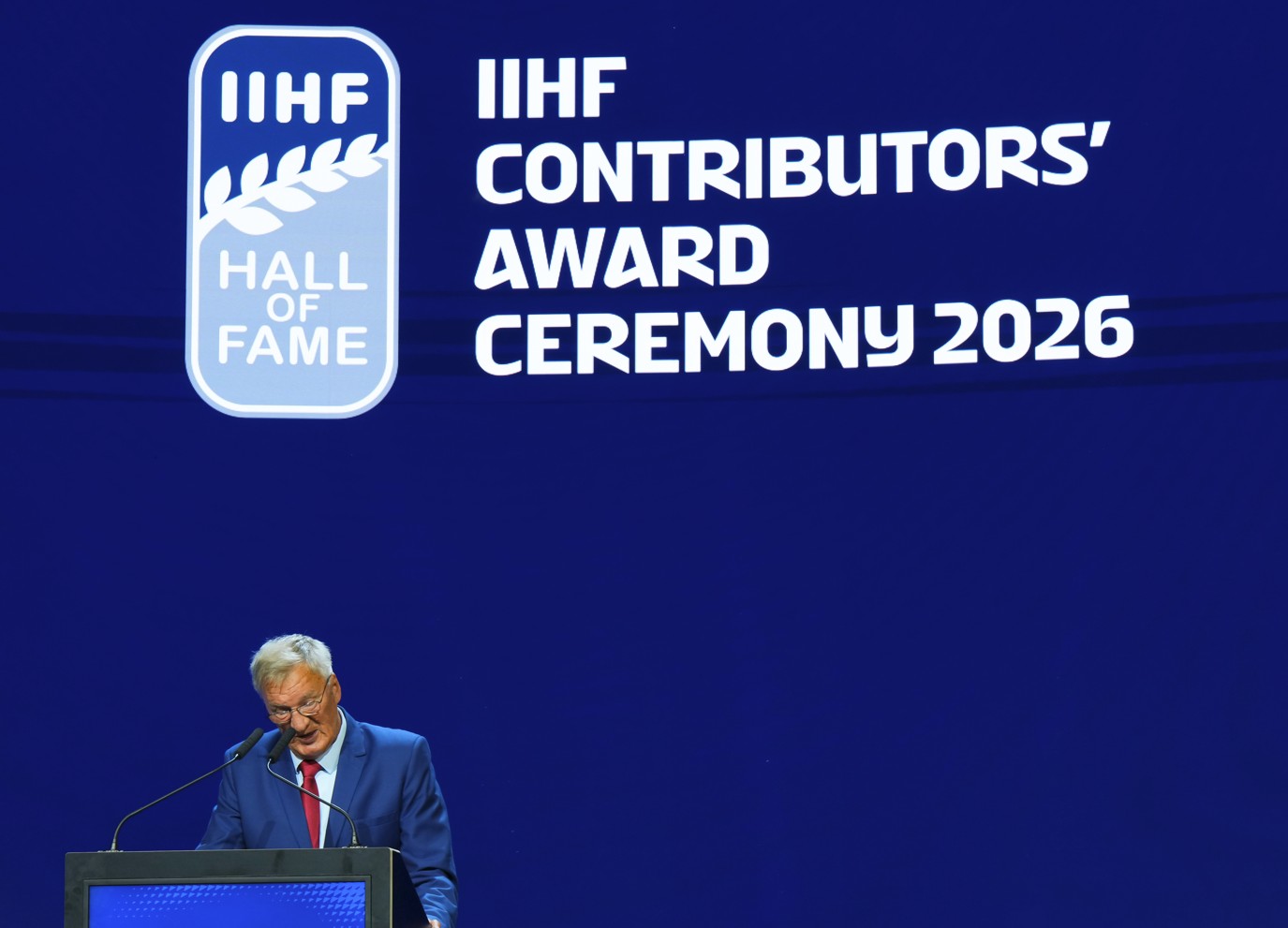
“I was 28,” he told IIHF.com in Zurich after he was inducted into the IIHF Hall of Fame during the final weekend of the 2026 IIHF World Championship. “I had no coaching experience. Zero.”
That didn’t mean Cicurskis doubted his own abilities. On the contrary.
“I looked at Viktor Tikhonov, Vladimir Yurzinov, Scotty Bowman and thought I was better than them. I was the star. But after five years, I realized I had a lot to learn,” he said.
Today, almost fifty years later — Cicurskis turned 80 in January — he’s got experience that’s been distilled into wisdom.
One of the things he’s learned is that being in great physical shape isn’t everything in hockey.
“This is the most important thing,” he said, tapping the side of his head.
“I wanted to teach the kids to be technical and to play as a collective,” he added.
And not just on the ice. He wanted his players to be a well-behaved team outside the rink as well.
“Of course, the skating skills were very important but just as important for me was to see the players be great teammates,” he said.
That included the players’ families, people on the street, everyone. Manners maketh man, he says.
“I wanted the players to say good morning to everyone, to each other’s parents. I didn’t want my mother to come to the rink and have no one say hello to her,” Cicurskis added.
No wonder then that when the team traveled from Riga to Moscow and back, the train conductor came to tell Cicurskis how amazed he was when the car was so clean afterwards.
“I knew everyone, their parents, sisters, brothers, grandfathers, everyone. The families were also part of my team. We all wanted the best for the kids. It was a hockey family,” he said.
The respect he showed and received in return created lifelong memories and relationships. Recently, he was on a tram in his hometown, Liepaja, when two men approached him.
“One of them came up to me and thanked me for keeping him on the team, even though he was a lousy skater,” he said, adding that the kid was skating completely wrong.
But he also knew the kid had a tough time at home so he wanted to make sure he stayed in hockey. Another man sent him a letter, thanking Cicurskis for allowing him to skate in the local rink during the team practice.
“He was a little bit mentally challenged, and his mother asked me if the boy could skate with us for a while, and I said, ‘of course’,” Cicurskis said.
Fifty years later, memories of those minutes skating with a very young Belavskis were still with the man.
As was the coach who made it happen.
That’s better than any medals and championships.
For him. For each other.
He’s a hockey coach, but for many, he’s been their life coach. Known to be tough but fair, Cicurskis has dedicated his life to coaching kids in Latvia — regardless of whether they’ll make it to the national team or the NHL.
And many of them have.
In the 2026 IIHF World Championship, a former Cicurskis protégé, Rudolfs Balcers, captained the Latvian team and broke the nation’s record for most goals in a single tournament, with seven. Other notable players to come out of the Cicurskis school include former NHLer Sandis Ozonlish and Aleksandrs Belavskis, another former Team Latvia captain, who was on the first team that Cicurskis ever coached in the early 1970s.
At that time, he was still an active player, but the junior team at his club needed a new coach because the old one had a drinking problem. The club’s management told Cicurskis that he was now the coach.
“I was 28,” he told IIHF.com in Zurich after he was inducted into the IIHF Hall of Fame during the final weekend of the 2026 IIHF World Championship. “I had no coaching experience. Zero.”
That didn’t mean Cicurskis doubted his own abilities. On the contrary.
“I looked at Viktor Tikhonov, Vladimir Yurzinov, Scotty Bowman and thought I was better than them. I was the star. But after five years, I realized I had a lot to learn,” he said.
Today, almost fifty years later — Cicurskis turned 80 in January — he’s got experience that’s been distilled into wisdom.
One of the things he’s learned is that being in great physical shape isn’t everything in hockey.
“This is the most important thing,” he said, tapping the side of his head.
“I wanted to teach the kids to be technical and to play as a collective,” he added.
And not just on the ice. He wanted his players to be a well-behaved team outside the rink as well.
“Of course, the skating skills were very important but just as important for me was to see the players be great teammates,” he said.
That included the players’ families, people on the street, everyone. Manners maketh man, he says.
“I wanted the players to say good morning to everyone, to each other’s parents. I didn’t want my mother to come to the rink and have no one say hello to her,” Cicurskis added.
No wonder then that when the team traveled from Riga to Moscow and back, the train conductor came to tell Cicurskis how amazed he was when the car was so clean afterwards.
“I knew everyone, their parents, sisters, brothers, grandfathers, everyone. The families were also part of my team. We all wanted the best for the kids. It was a hockey family,” he said.
The respect he showed and received in return created lifelong memories and relationships. Recently, he was on a tram in his hometown, Liepaja, when two men approached him.
“One of them came up to me and thanked me for keeping him on the team, even though he was a lousy skater,” he said, adding that the kid was skating completely wrong.
But he also knew the kid had a tough time at home so he wanted to make sure he stayed in hockey. Another man sent him a letter, thanking Cicurskis for allowing him to skate in the local rink during the team practice.
“He was a little bit mentally challenged, and his mother asked me if the boy could skate with us for a while, and I said, ‘of course’,” Cicurskis said.
Fifty years later, memories of those minutes skating with a very young Belavskis were still with the man.
As was the coach who made it happen.
That’s better than any medals and championships.